What it took to run our setup at the Australian PGA Championship
Running a simulator activation at the Australian PGA Championship is a different experience to a corporate function at a Brisbane CBD venue.
Both are good. They're just completely different problems.
This is the behind-the-scenes story of what it took to set up and run our activation at the Australian PGA — and what I learned doing it alongside the QLD PGA Championships in 2025.
Why a professional golf event is a different challenge
At a corporate event, you're working with a mixed crowd. Some people have never held a club. The brief is usually engagement, entertainment, and making the event planner look good. The software choice is often Awesome Golf because it's the most accessible option.
At a professional golf tournament, the crowd profile flips entirely. You're dealing with golf fans — people who've driven two hours to watch the best players in the country compete. They've paid for the experience. They care about the game. They know what a smash factor is.
That changes almost every decision you make about the activation.
The setup
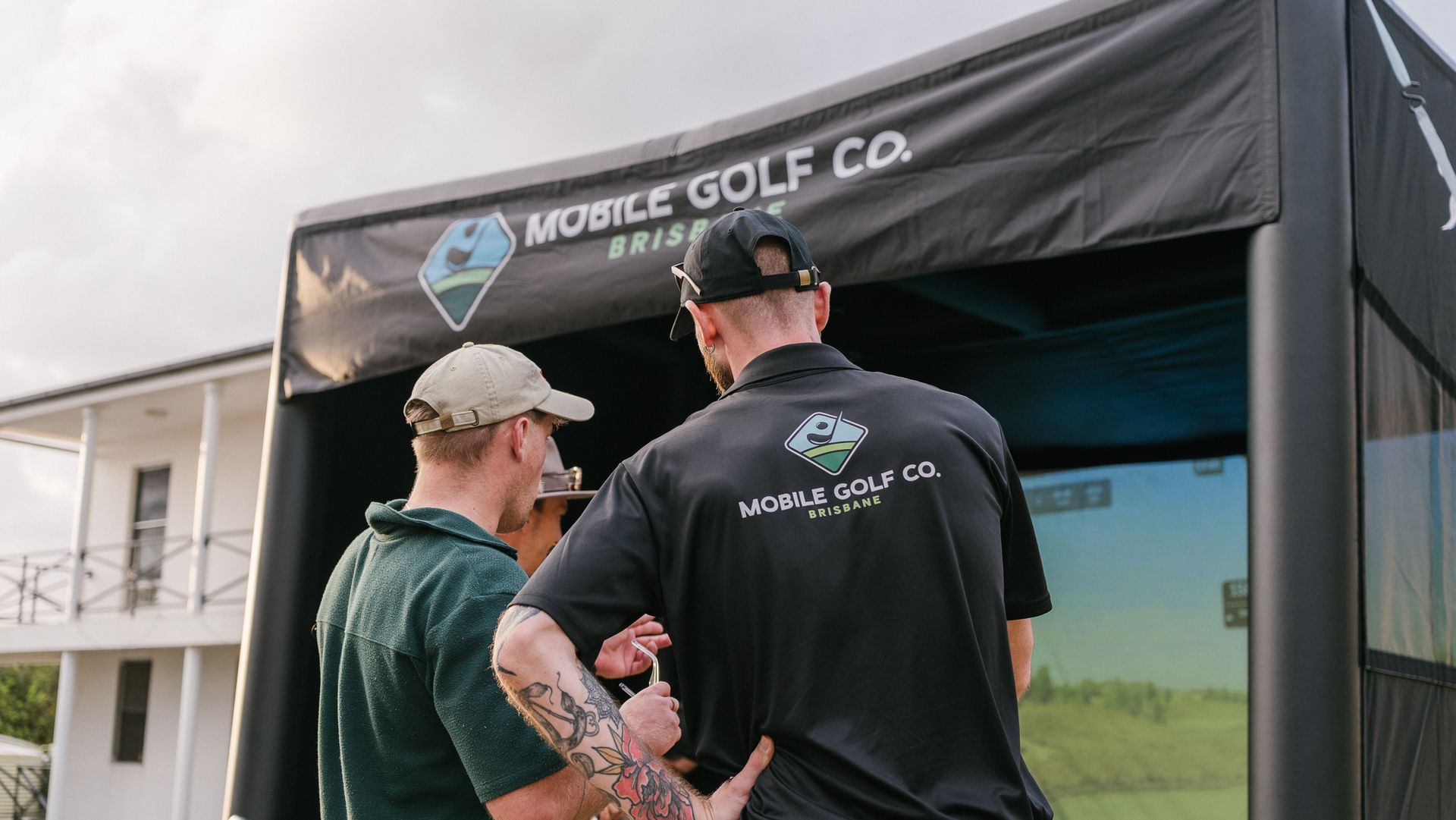
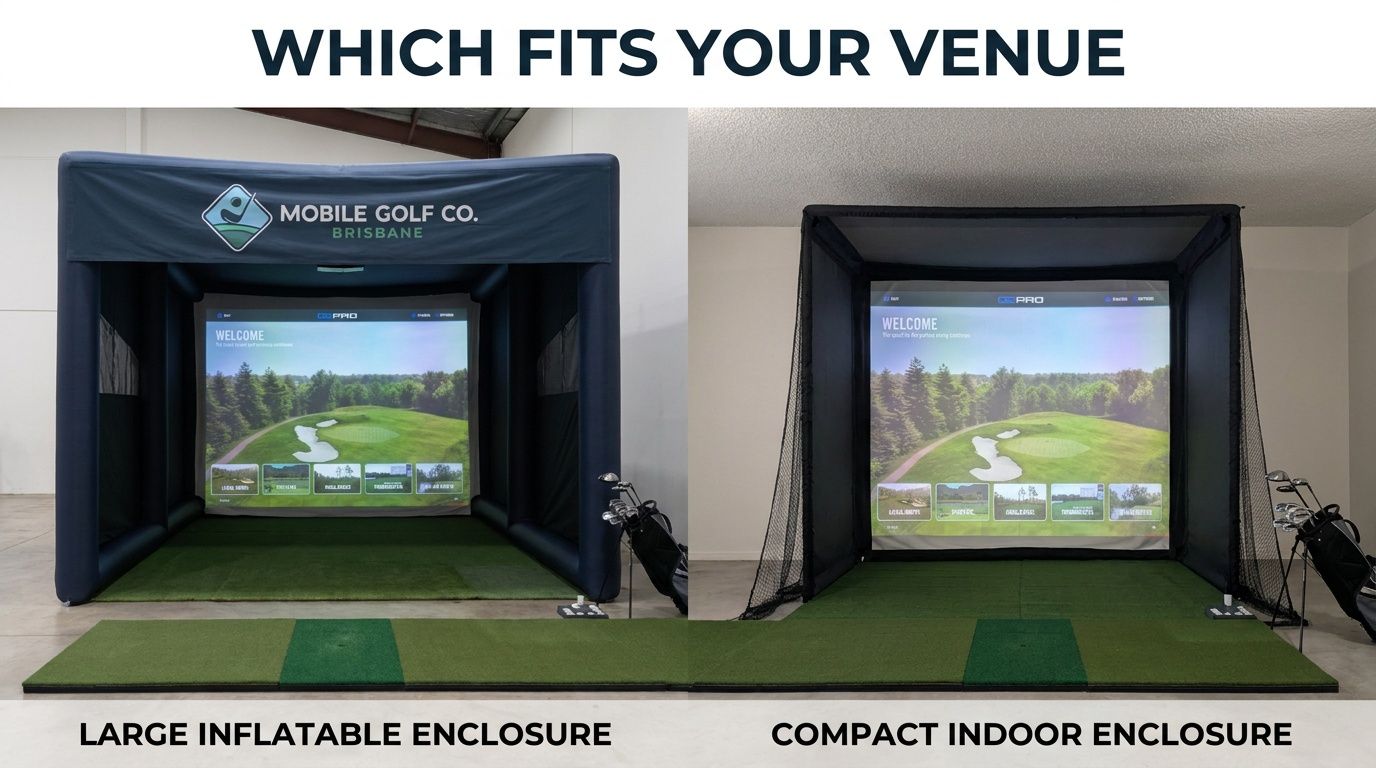
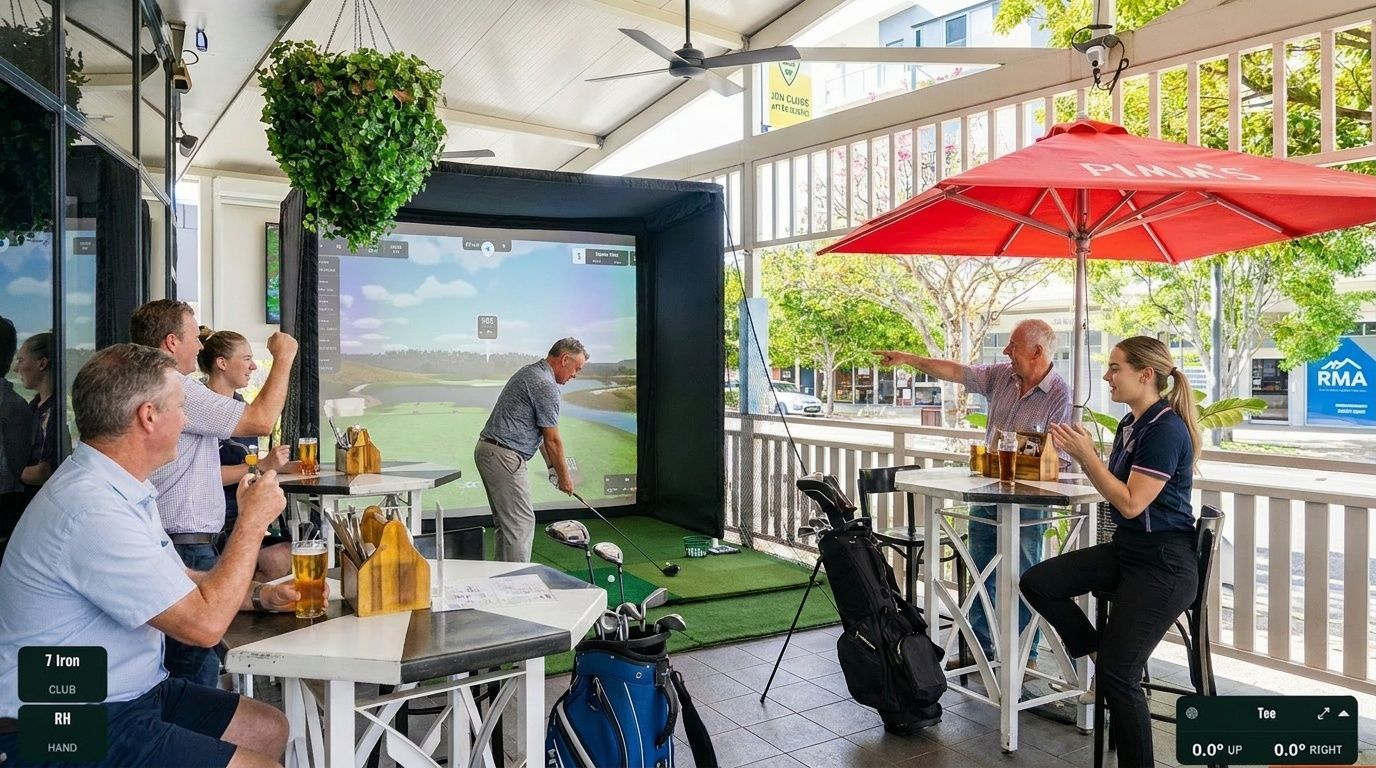
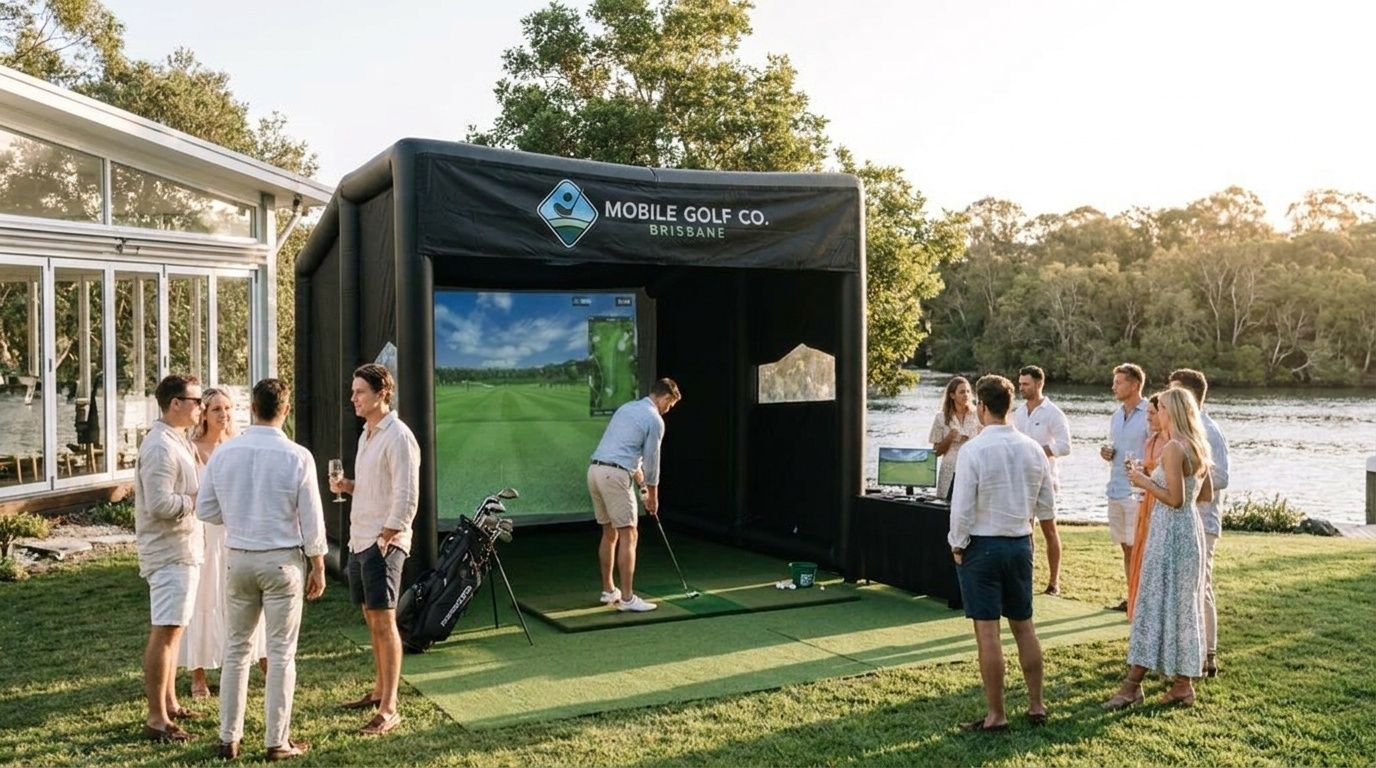
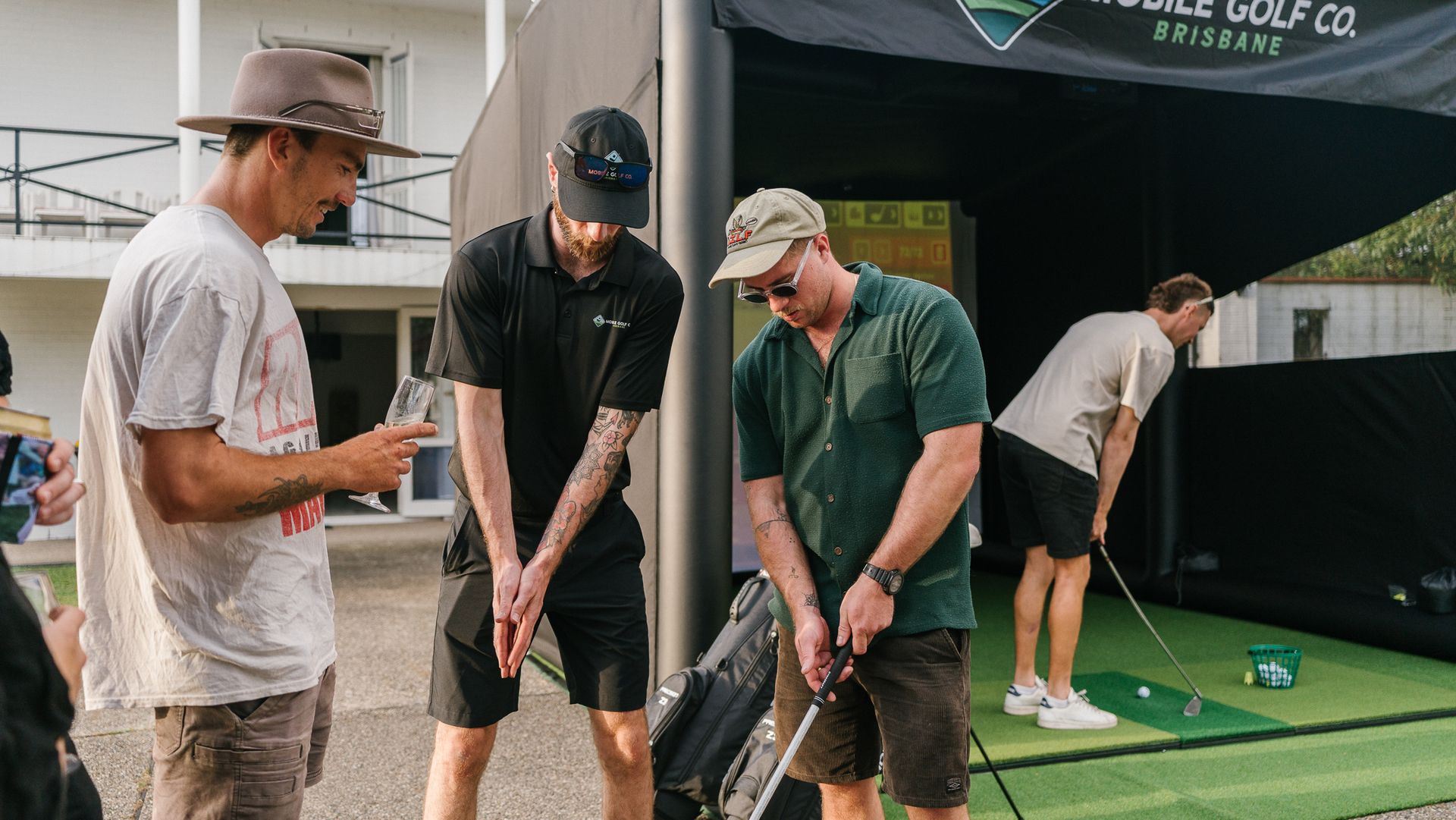
We ran the activation in the Buffalo Trace Clubhouse right next to the renowned 'Party Hole' of the tournament. The compact enclosure went up on the event grounds in a high-traffic corridor in the Champions Village.
Position at a major event matters enormously. You want foot traffic passing you naturally — not a spot you've been assigned in the corner of a car park. We worked with the event organisers on placement so that guests moving between the course and the hospitality areas would pass directly through our footprint.
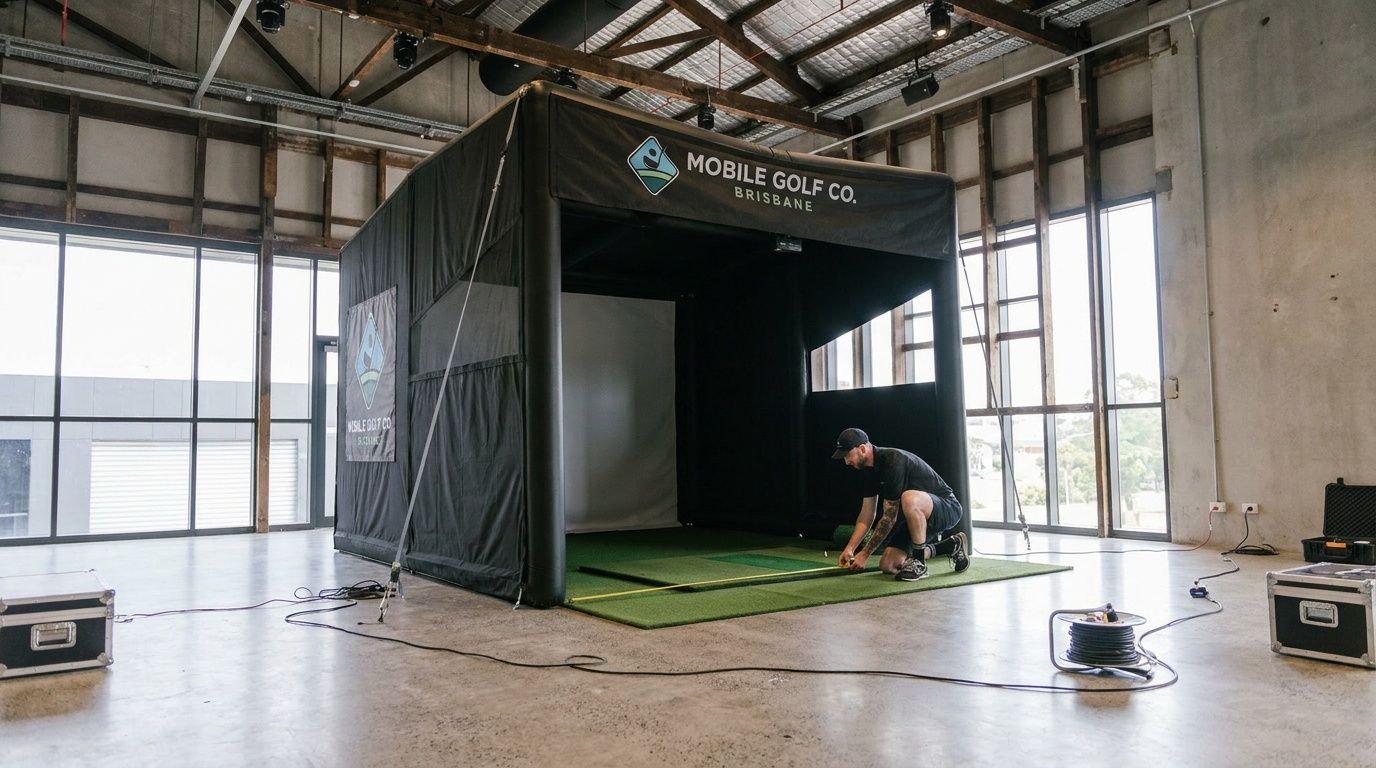
Setup happened the day prior to the public opening. Tournament events run tight logistics — there are dozens of suppliers, equipment restrictions around certain areas of the course, and specific bump-in windows you have to hit. We were in position, calibrated, and ready for a test run well before the first guests arrived the next morning.
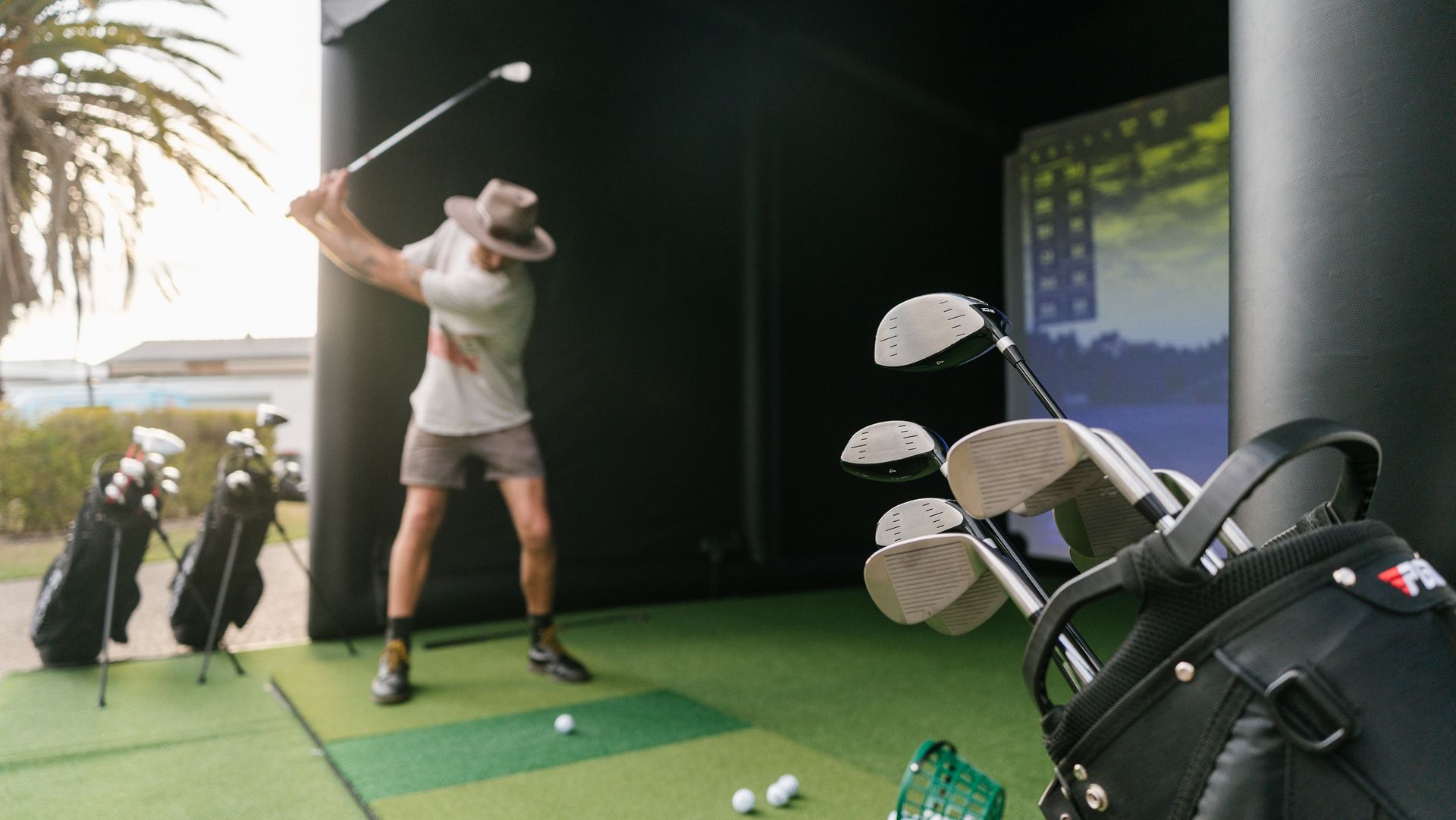
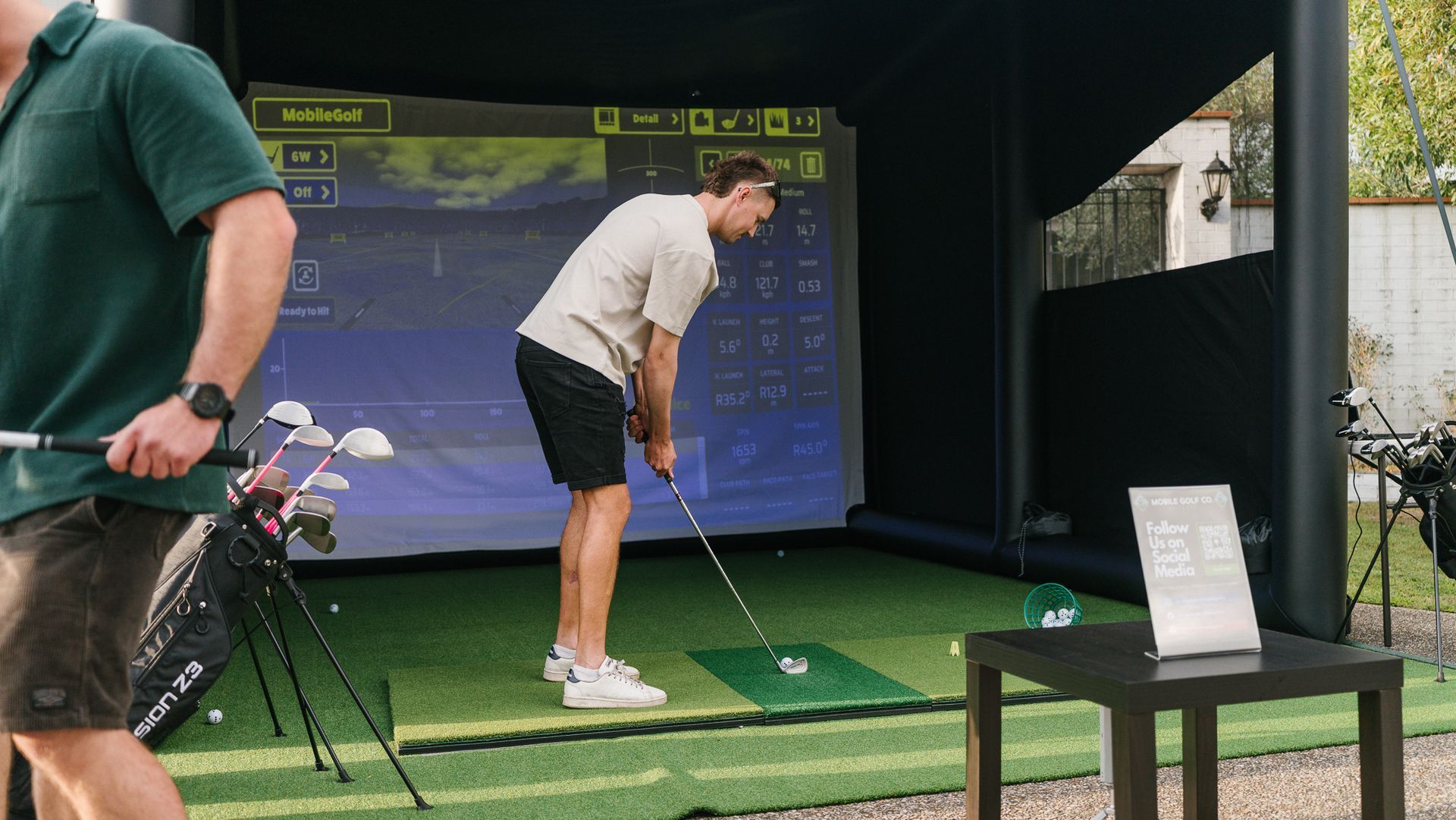
The technology used was the same as any activation: Rapsodo MLM2 Pro, BenQ projector, full GSPro software suite. But at a golf event, we ran GSPro exclusively. The crowd expected realism. Augusta National, Pebble Beach, St Andrews — courses they'd seen on television. That's what they played.
The crowd dynamic
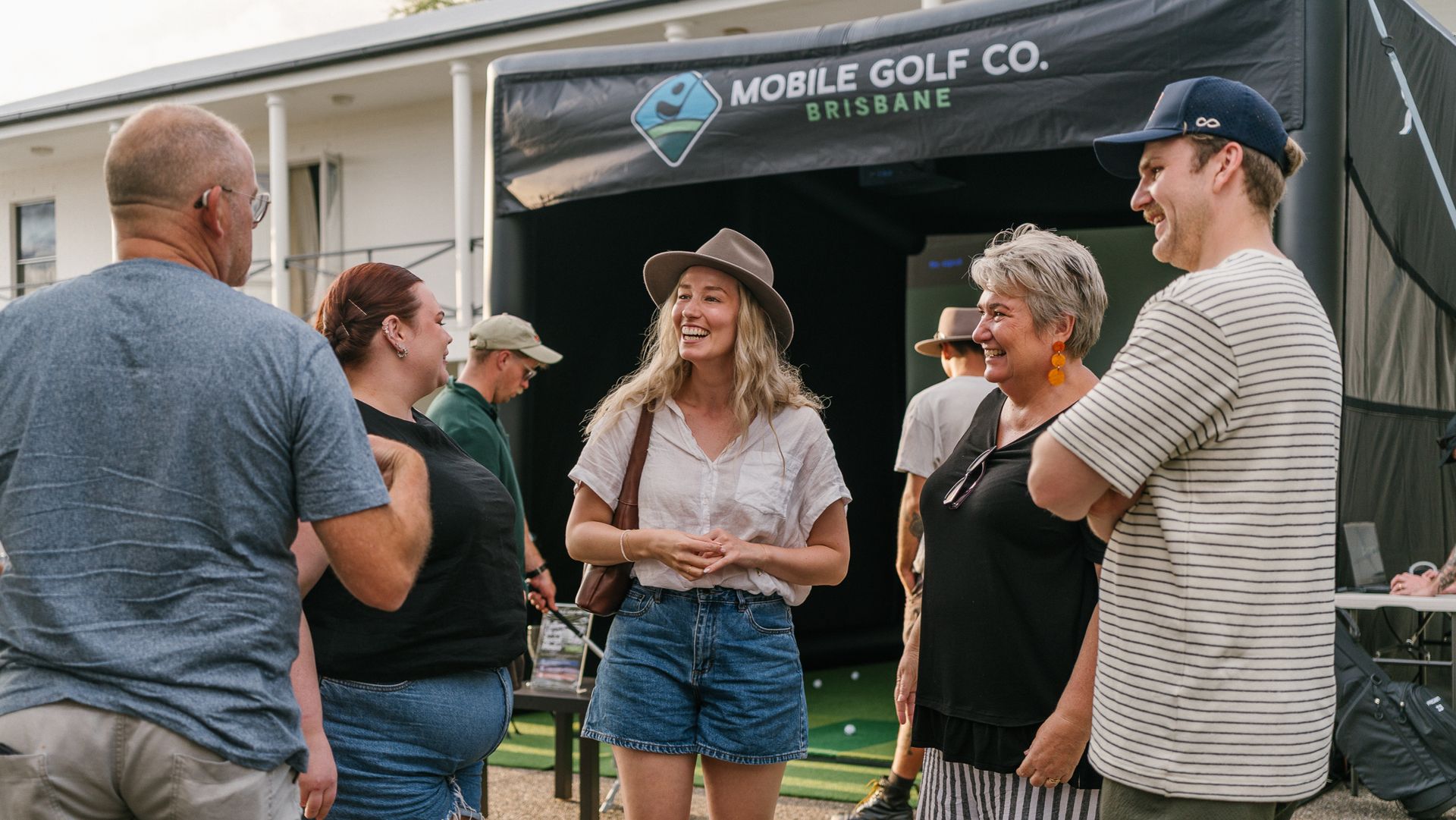
Golf event crowds are unlike corporate event crowds in one specific way: they don't need to be sold on participating.
At a corporate function, the first few guests often need encouragement — someone to go first, break the ice, explain what's happening. The host earns the crowd's engagement.
At the PGA, the queue formed within 20 minutes of opening. Golfers who'd been watching tour professionals all morning wanted to hit a shot themselves on the same technology. The data feedback — seeing your own ball speed and comparing it against what the tour players were generating on the range — was the main draw.
The conversation that happened most often: "What was my smash factor?" followed immediately by "Let me try again."
That's the Rapsodo doing its job. When the data is accurate and displayed clearly, people genuinely want to improve their number. It's one of the reasons we use it at every activation, regardless of the event type. Even non-golfers respond to the feedback loop — but at a golf event, it's the whole point.
What we ran
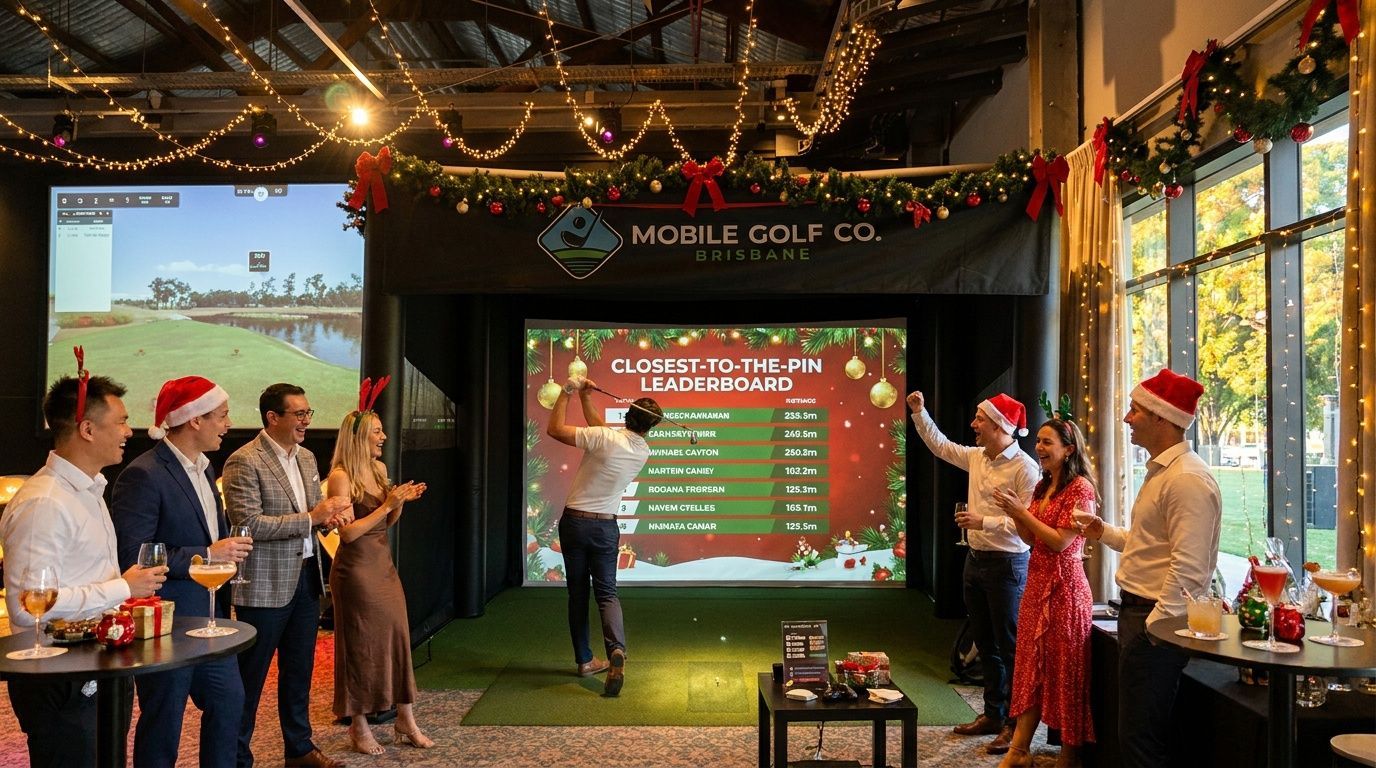
Over the course of the tournament, we ran closest-to-the-pin competitions with daily leaderboards. Guests registered, took their shot on a designated par-3 hole in GSPro, and their result went on the board.
The daily competition structure meant people came back across multiple days. Someone who finished fifth on day one came back on day two with a strategy. That kind of repeat engagement — multiple sessions per guest, genuine investment in the outcome — is the best version of what an activation can produce.
We also ran a longest drive competition as a secondary format for those less interested in precision and more interested in hitting it as hard as possible. Both demographics were well-represented.
What running at this level taught me
A few things came out of the PGA experience that have shaped how I approach larger activations:
Pre-event calibration time is critical. At a major event with tight logistics, there's no opportunity to run into a calibration problem on the day and solve it in front of guests. We built more test-shot time into the setup schedule, and it was the right call.
The host role is different at a golf crowd. At corporate events, the host educates. At a golf event, the host facilitates — the guests often know more about the game than the average corporate attendee, and they want control over their own experience rather than being guided through it. Knowing when to step back is a skill.
Scale changes the logistics. A 4-hour corporate activation with 60 guests is a contained operation. A multi-day tournament activation with hundreds of participants is a throughput management challenge. Queueing systems, competition reset procedures, data recording — all of it needs to be more systematised.
Credibility is compounding. Being on-site at the Australian PGA Championship isn't just good for the week — it's the kind of credential that changes conversations with future corporate clients. When an events manager asks "who have you worked with?" and the answer includes the Australian PGA, the trust gap closes much faster.
What this means for large-scale activations
If you're planning a large-scale activation — a conference with multiple hundred attendees, a race day anchoring all-day hospitality, a multi-day trade show presence — the operational model is different from a standard 4-hour corporate event.
The questions to ask:
- What's the expected throughput per hour, and does the activation format match it?
- What does the competition structure look like across multiple days or sessions?
- What are the logistics around bump-in, and what's the contingency if something needs to be rebuilt on site?
- Who handles technical issues during the event itself?
These are the kinds of questions I'd want answered before committing to a large-scale activation as a client, and they're the questions I'm prepared to answer clearly as the operator.
For the sponsor and brand side of what large activations can deliver, the sponsor ROI guide covers what exposure, dwell time, and naming rights actually look like in practice. For the event planning side, the Brisbane activation guide is the starting point.
If you're planning something significant, talk to us directly. Larger events warrant a proper conversation, not a web form.
Related: Corporate activation packages · What is a golf simulator activation? · Trade show and exhibition hire
Here's Some Other Posts You Might Like