The real cost of owning a simulator versus booking one when you need it
This question comes up more than any other. Should I hire a golf simulator for my event — or just buy one outright?
The honest answer is that both options exist for a reason and the right choice depends almost entirely on how often you plan to use it and what you're using it for.
I run a mobile golf simulator activation business. I've built the business around the hire model, so you might expect me to push that direction. But if buying a simulator was the better move for your situation, I'd rather tell you that — because sending someone the wrong way doesn't help anyone.
Here's a genuine breakdown of both sides.
What it actually costs to buy a golf simulator
A quality home golf simulator setup that includes everything you need to actually use it — enclosure, launch monitor, projector, PC, hitting mat, and software — starts around $13,000 to $15,000.
That's the full package. Here's what that breaks down to:
| Component | Cost range |
|---|---|
| Launch monitor (entry to mid-range) | $1,000–$5,000 |
| Enclosure + impact screen | $2,500–$5,000 |
| Projector | $1,500–$5,000 |
| Gaming PC or laptop | $1,500–$3,000 |
| Commercial hitting mat | $400–$800 |
| Software (GSPro subscription) | $250–$400/year |
| Installation and setup | $500–$1,500 |
These are realistic numbers for a setup that will actually perform well. The $500 all-in-one kits you'll find online are not the same product — lower accuracy launch monitors, cheap screens that distort, and software that doesn't update. If you want something that gives you data you can trust and doesn't break down after three months, spend properly or don't spend at all.
Beyond the upfront cost, ownership carries ongoing expenses:
- Storage: An inflatable enclosure that's properly stored takes space. Most residential garages work, but it needs to be clean, dry, and temperature-stable.
- Maintenance: The hitting mat wears. Software subscriptions renew. The projector lamp eventually needs replacing.
- Transport: If you're moving the setup to different venues, factor in the vehicle, the time to load and unload, and the knowledge required to set it up correctly.
- Insurance: A $15,000 setup sitting in a garage or travelling to events needs to be insured.
None of these are deal-breakers. They're just the real picture.
What it costs to hire
Our standard packages:
| Package | Duration | Price (ex GST) |
|---|---|---|
| Standard | 4 hours | $1,600 |
| Pro | 6 hours | $2,000 |
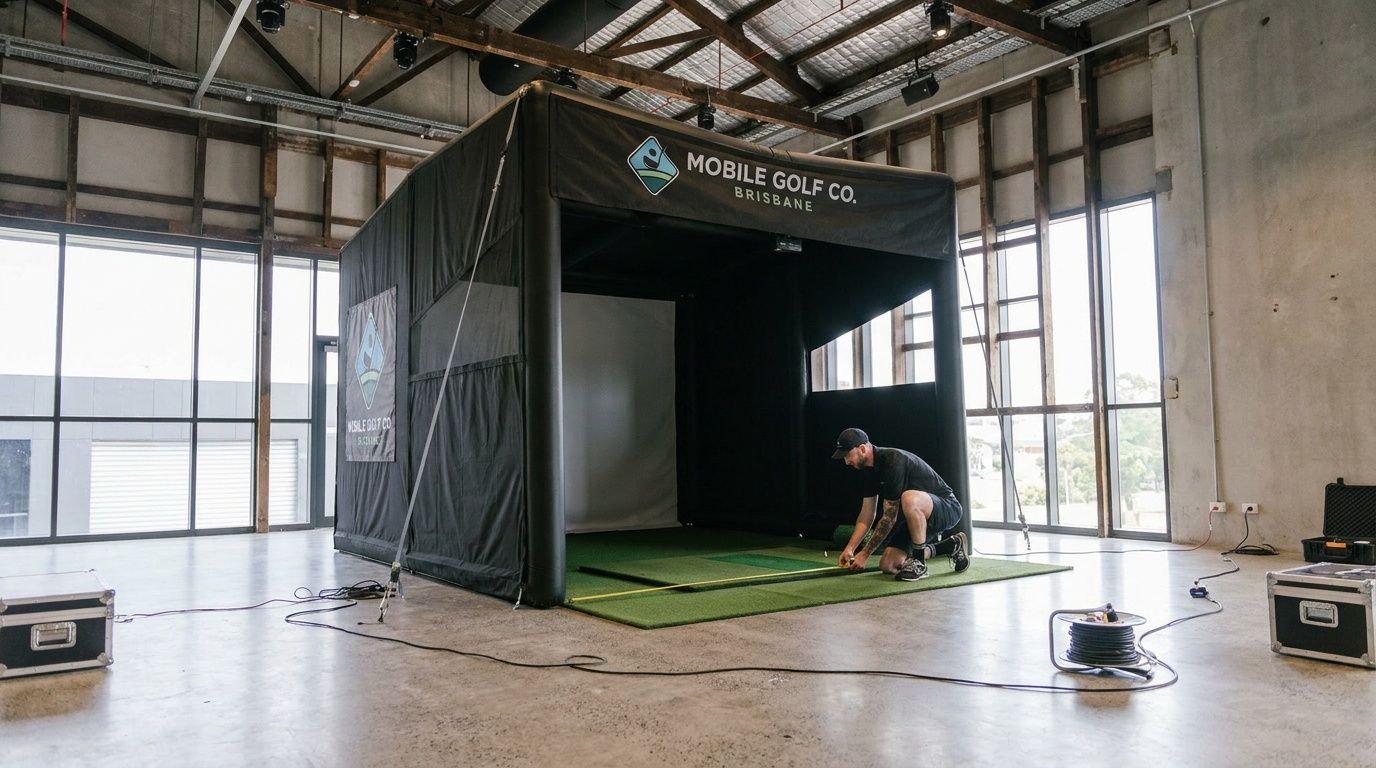
Hire includes everything: professional host, all equipment, setup and packdown, full software access, and ongoing support during the event. You pay for a staffed, managed experience — not just equipment.
The break-even point, assuming you're comparing against a $14,000 purchase: roughly 8–9 standard events. After that, ownership starts to look cheaper on a per-event basis — assuming everything runs smoothly, you're setting it up yourself competently, and you're not accounting for your time.
When buying makes sense
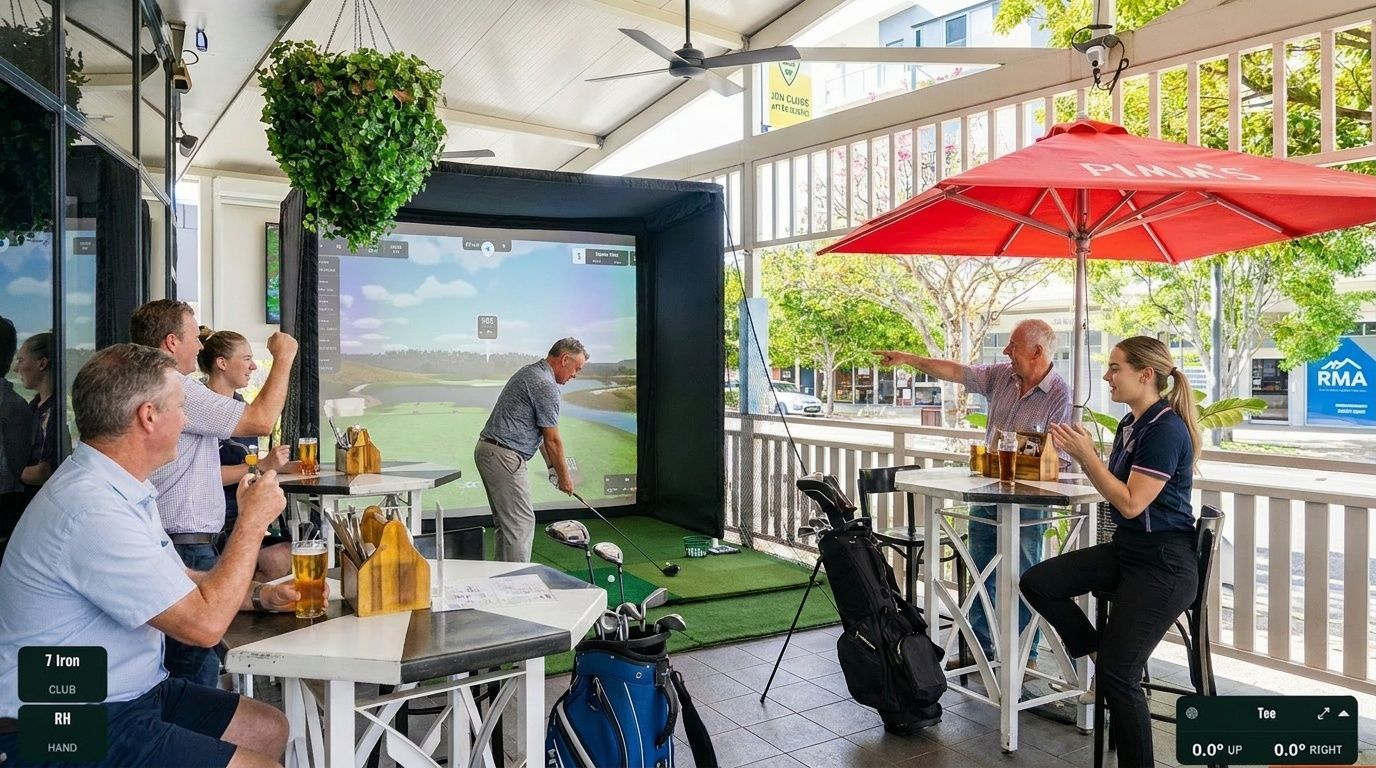
You're a venue, a golf club, or a sports bar. If the simulator is going to run multiple times a week as a permanent fixture, ownership pays off over time. The cost per use drops quickly.
You're a dedicated practice facility. A home simulator setup for personal practice is a legitimate investment if you're playing golf seriously and want the ability to work on your game year-round.
You're starting a hire business yourself. If you want to do what I do — build a mobile golf simulator activation business — you need to own the equipment. The capital outlay is the cost of entry. Our Golf Anywhere page covers what's involved.
You have the space sorted. A simulator that sits in a spare room or a well-set-up garage gets used. One that lives in the corner of a storage unit or requires a trailer to move every time doesn't.
When hiring makes sense
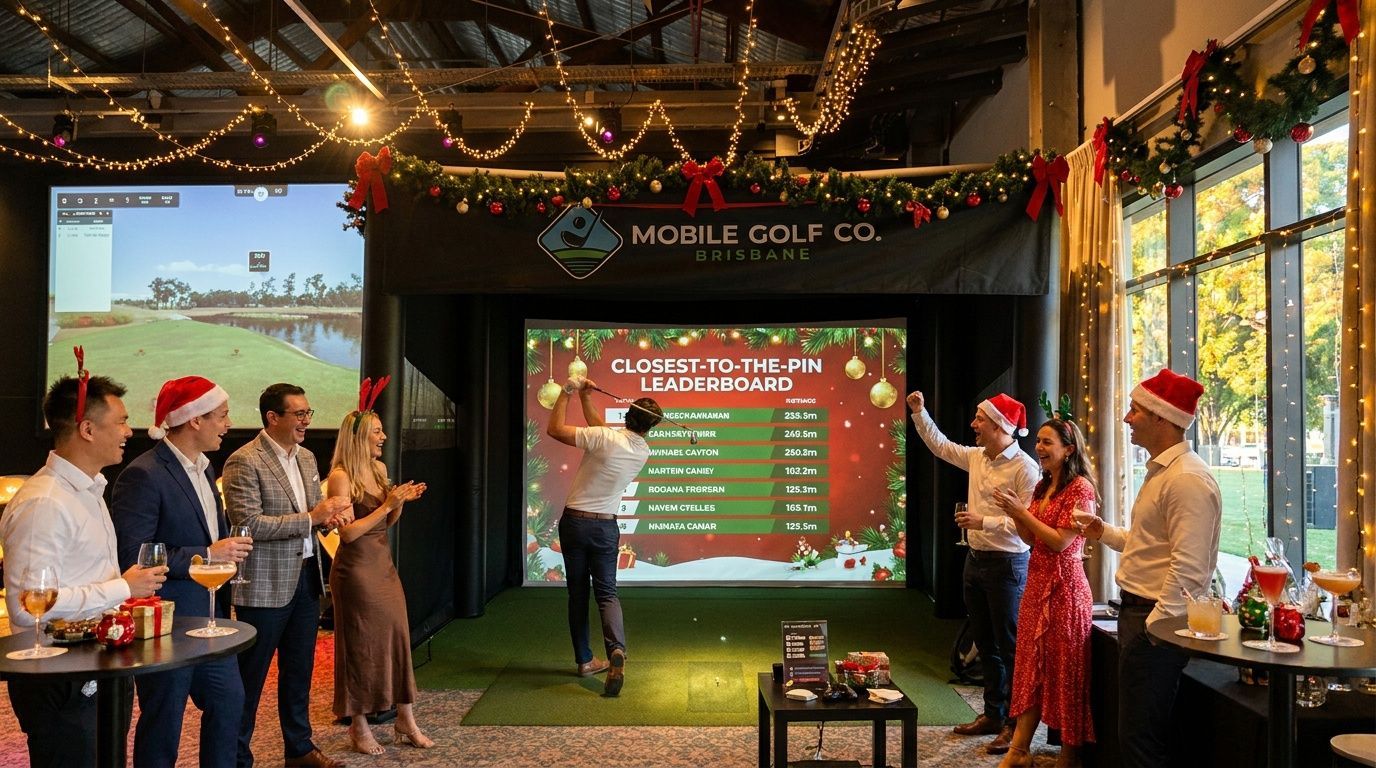
You need it for occasional events. If your use case is one or two events per year — Christmas party, EOFY function, client day — the hire model will almost always cost less than buying when you factor in the full cost of ownership.
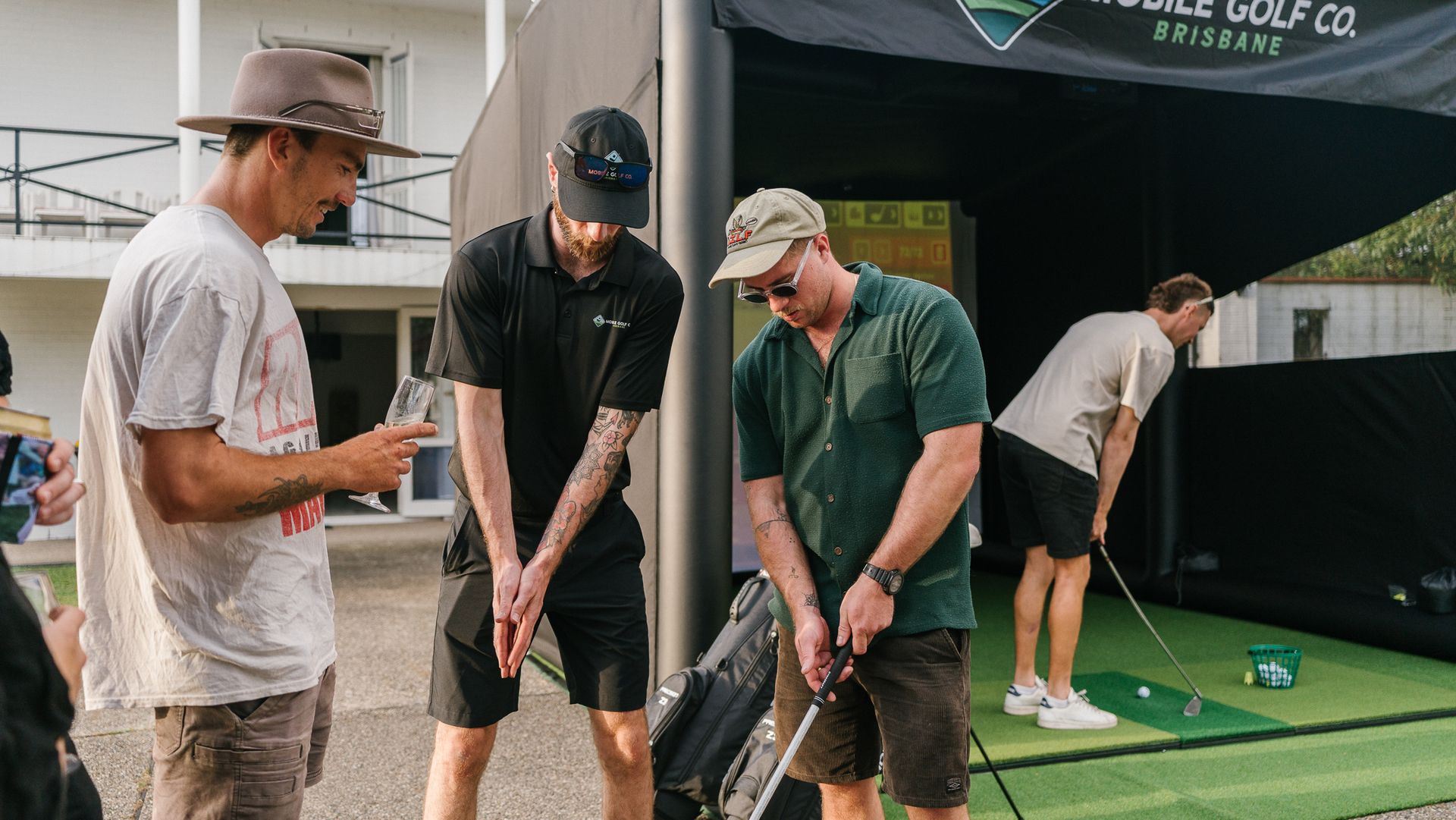
You don't want to operate it yourself. Running a professional simulator setup at an event is a skill. Someone needs to calibrate the launch monitor, manage the software, troubleshoot on the fly, keep the guest experience consistent, and manage a competition with 80 people in the room. Our host does this. A piece of equipment you bought doesn't come with that.
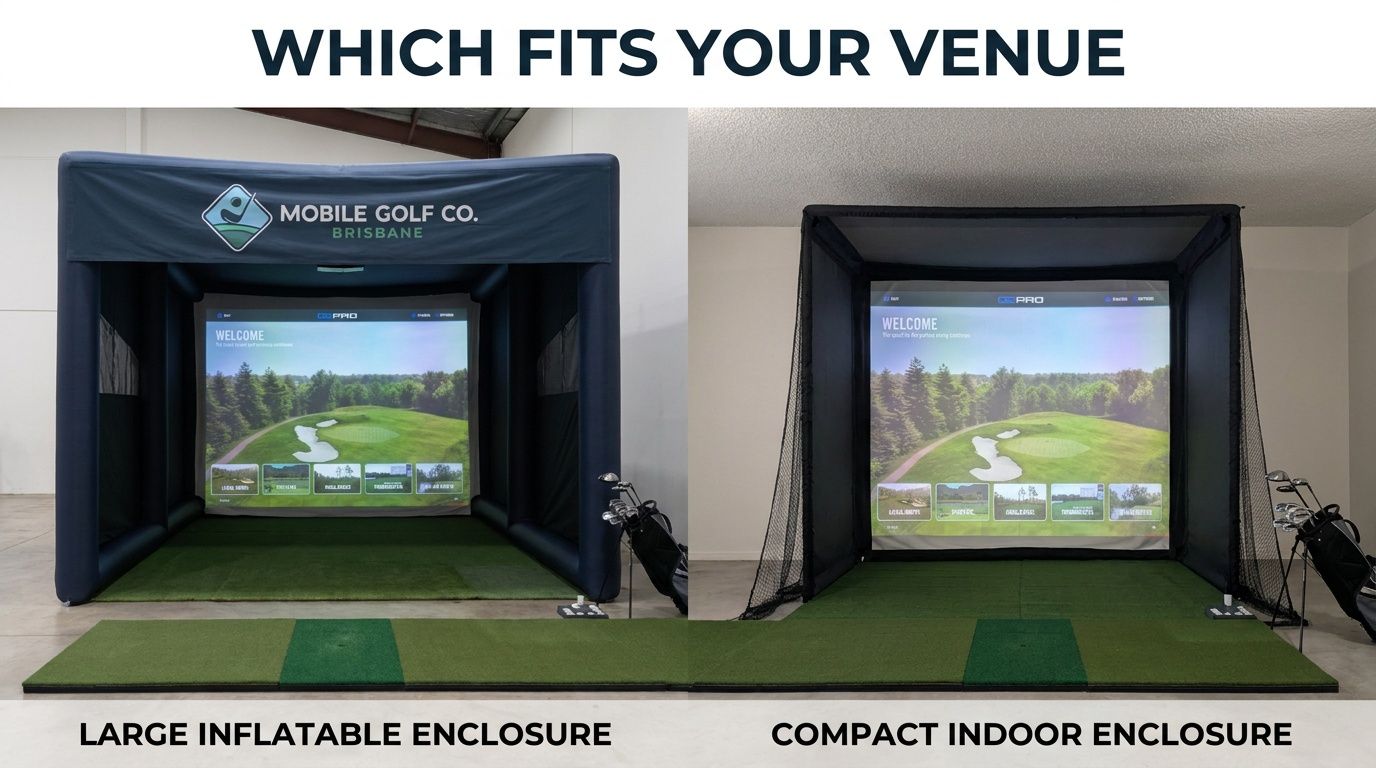
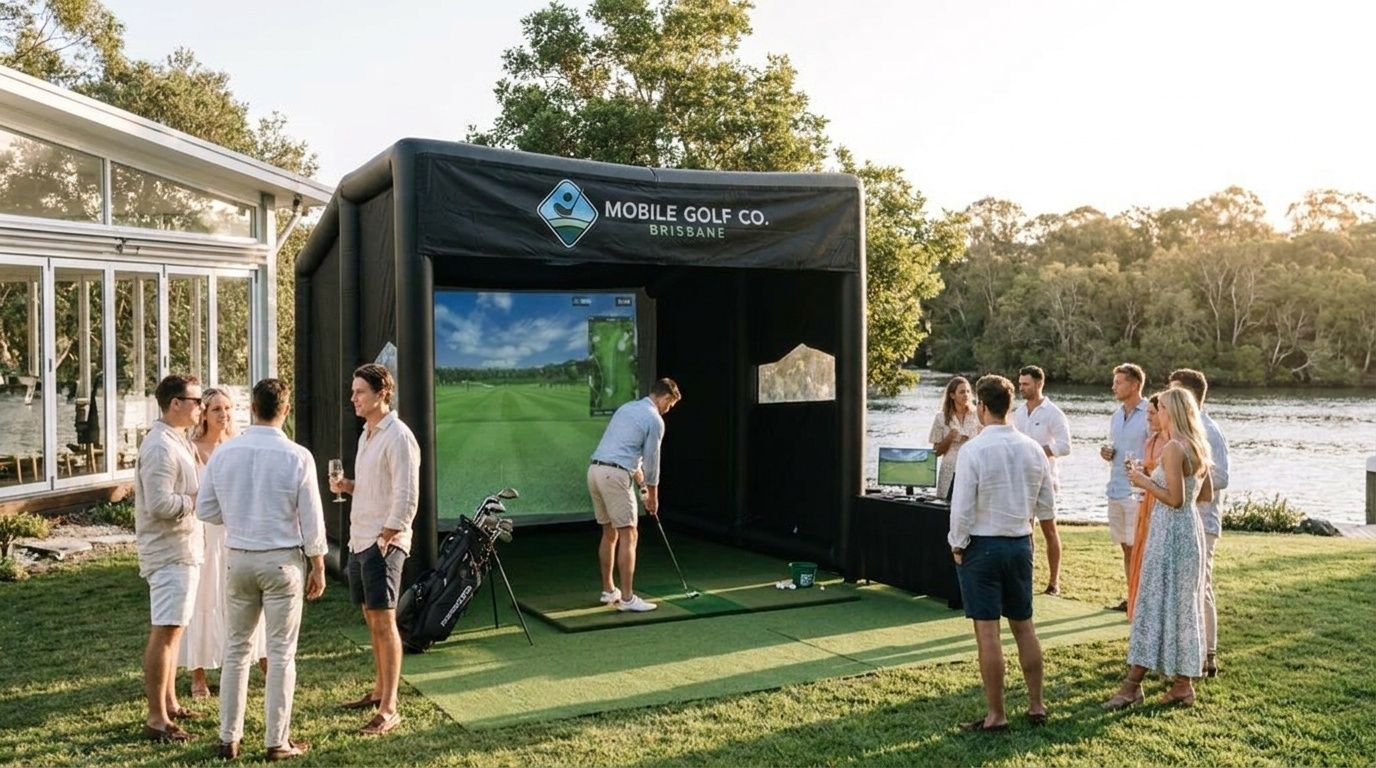
You need flexibility on format. Different events call for different setups. Outdoor events with open space suit the inflatable. Indoor function rooms with lower ceilings need the compact polyester enclosure. Switching between these as an owner requires owning both. Hire covers both automatically.
You don't have a suitable space. The simulator needs to live somewhere when it's not being used. If you're running one or two events a year from a standard residential property with no dedicated space, storage becomes a genuine issue.
Your corporate clients expect a professional. An event manager hiring entertainment for a corporate function expects a professional host, professional presentation, and zero day-of stress. Dropping off equipment and hoping for the best doesn't meet that expectation.
The portable golf simulator question
One thing that comes up in the hire vs buying conversation: portable simulators. Lower-cost units that are more compact, easier to transport, and cheaper to buy.
The trade-off is accuracy. Portable golf simulator rental options at the sub-$1,000 price point use radar-based launch monitors that estimate ball flight rather than capturing it precisely. They work for casual use. They don't work if someone is trying to improve their game or wants data they can actually trust.
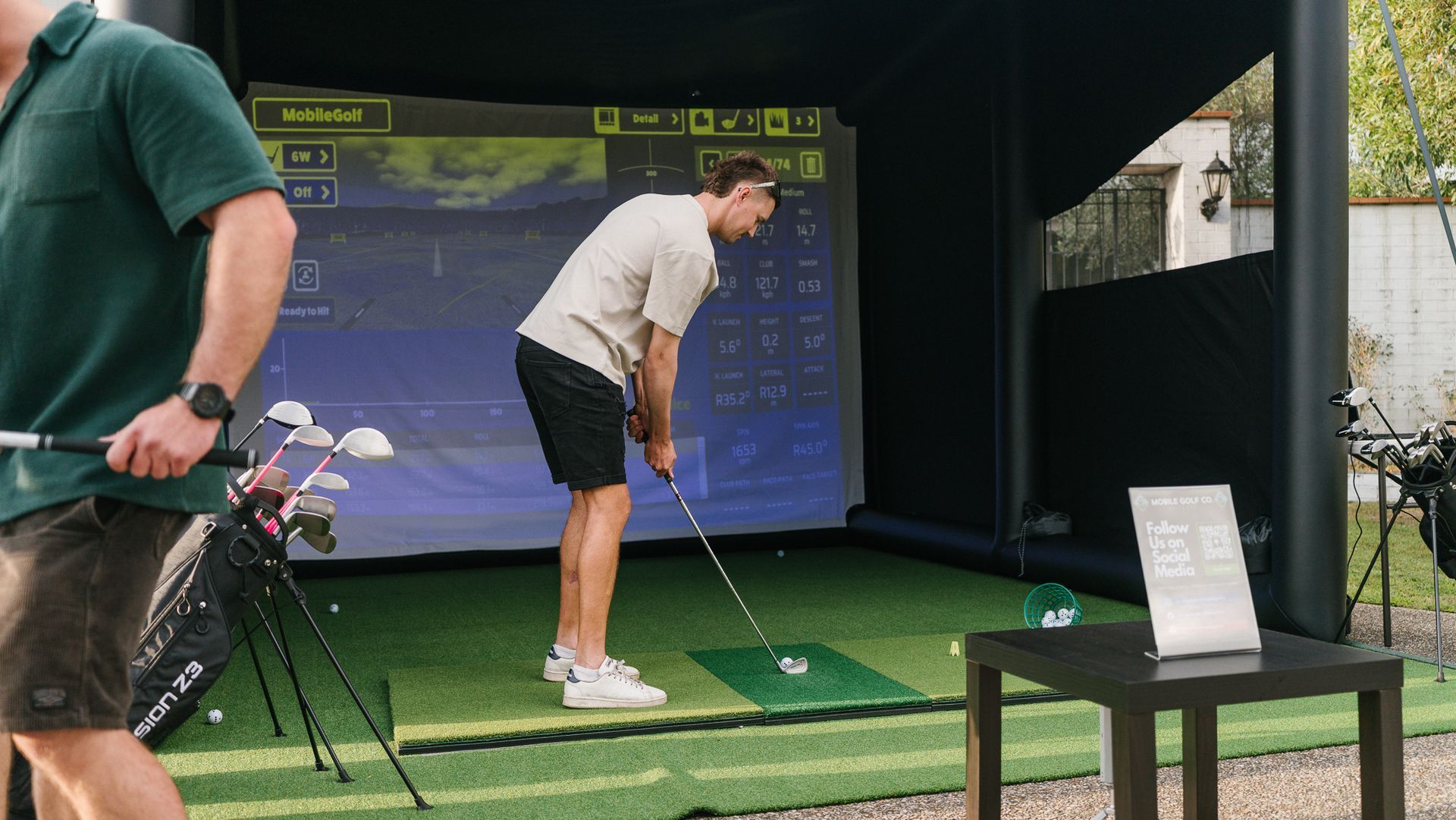
The Rapsodo MLM2 Pro we use at every activation is a camera-based dual-lens launch monitor. The shot data — ball speed, launch angle, spin rate, smash factor — is accurate. The carry distance on screen reflects what the golfer actually hit. That distinction matters when you're running a corporate competition and someone's score is on a leaderboard in front of their colleagues.
For a deeper look at what the Rapsodo captures and why it matters at events, see how the inflatable setup works — it covers the full technology stack.
Home golf simulator vs hire — a direct comparison
| Factor | Buying | Hiring |
|---|---|---|
| Upfront cost | $13,000–$15,000 | $0 |
| Per-event cost (buying) | Decreases over time | Fixed |
| Per-event cost (hire) | N/A | $1,600–$2,000 |
| Requires your time to operate | Yes | No |
| Professional host included | No | Yes |
| Flexibility of venue/format | Limited | Full |
| Maintenance responsibility | Yours | Ours |
| Best for | Venues, regular use, practice | Events, corporate functions, occasional use |
The real question
What are you actually trying to do?
If the answer is "improve my golf game at home, year-round, and I have the space" — buying is worth considering. If the answer is "run a memorable event that my guests talk about" — hiring a professional activation will always produce a better result, because the equipment is only part of the experience.
View our hire packages and pricing or read our current pricing guide for Brisbane events to get a clear picture of what hire costs for your specific situation.
Related: How the inflatable golf simulator works · Golf Anywhere — at-home simulator concept · What data does a simulator track?
Here's Some Other Posts You Might Like